Brands and retailers source clothing for different reasons. A young label wants a partner who takes small collections seriously. A retailer wants dependable repeat production. Both need the same foundation: clear communication, a precise specification and a factory that checks its own work. This guide covers what to look at when you source womenswear in Türkiye and how to structure a first order so you learn quickly without taking on unnecessary risk.
Why Türkiye is on so many shortlists
Türkiye has a long tradition in textiles and garment making, a supply chain that covers fabrics, trims and finishing, and a location that keeps shipping routes to the UK and Germany short. For buyers, shorter routes mean more flexibility in planning and less stock committed far in advance. None of this replaces due diligence, but it explains why many buyers include Turkish manufacturers when they compare options.
Brand or retailer: the needs differ
A brand usually brings its own design and cares about handwriting: proportions, fabric feel, details that make the product recognisable. The factory's job is to reproduce that intent faithfully and consistently.
A retailer often cares more about repeatability: the same fit and quality across several deliveries, and a predictable way of handling changes. For retail programmes, ask how the factory records approved samples and measurements so a repeat order matches the first.
Weftport works with both. Production is custom and based on your own design, in woven and knitted womenswear, with projects starting from 500 pieces and no upper limit.
What to evaluate in a potential partner
Instead of asking only for a price, look at how a factory works:
- Communication. Do you get clear, structured answers in English or German? Who is your single point of contact?
- Specification handling. Does the team read your tech pack carefully and come back with sensible questions?
- Inspection routines. Is incoming fabric checked? What happens to defective fabric? Our partner factory sets defective fabric aside before cutting.
- Quality control. Are checks done at several stages, including before packing?
- Colour control. How are colours approved? A colour light box allows checking under standard light sources, which reduces disputes about shade.
You can read how the process is organised on our quality page.
Structuring a first order
A first order is a test of the relationship as much as of the product. Keep the range focused: a few styles you understand well are better than a large collection with many unknowns. Agree the reference sample, the measurement tolerances you accept and the packing instructions in writing before production starts. Decide who approves what and how quickly each side responds.
It also helps to plan a review after delivery. Compare the goods with the approved sample, list what went well and what to change, and use that list to improve the next specification.
Mistakes buyers make when sourcing
- Comparing prices without comparing specifications. Two quotations are only comparable if they assume the same fabric, construction and quantity.
- Choosing fabric late. Fabric drives cost, handling and timing, so decide direction early.
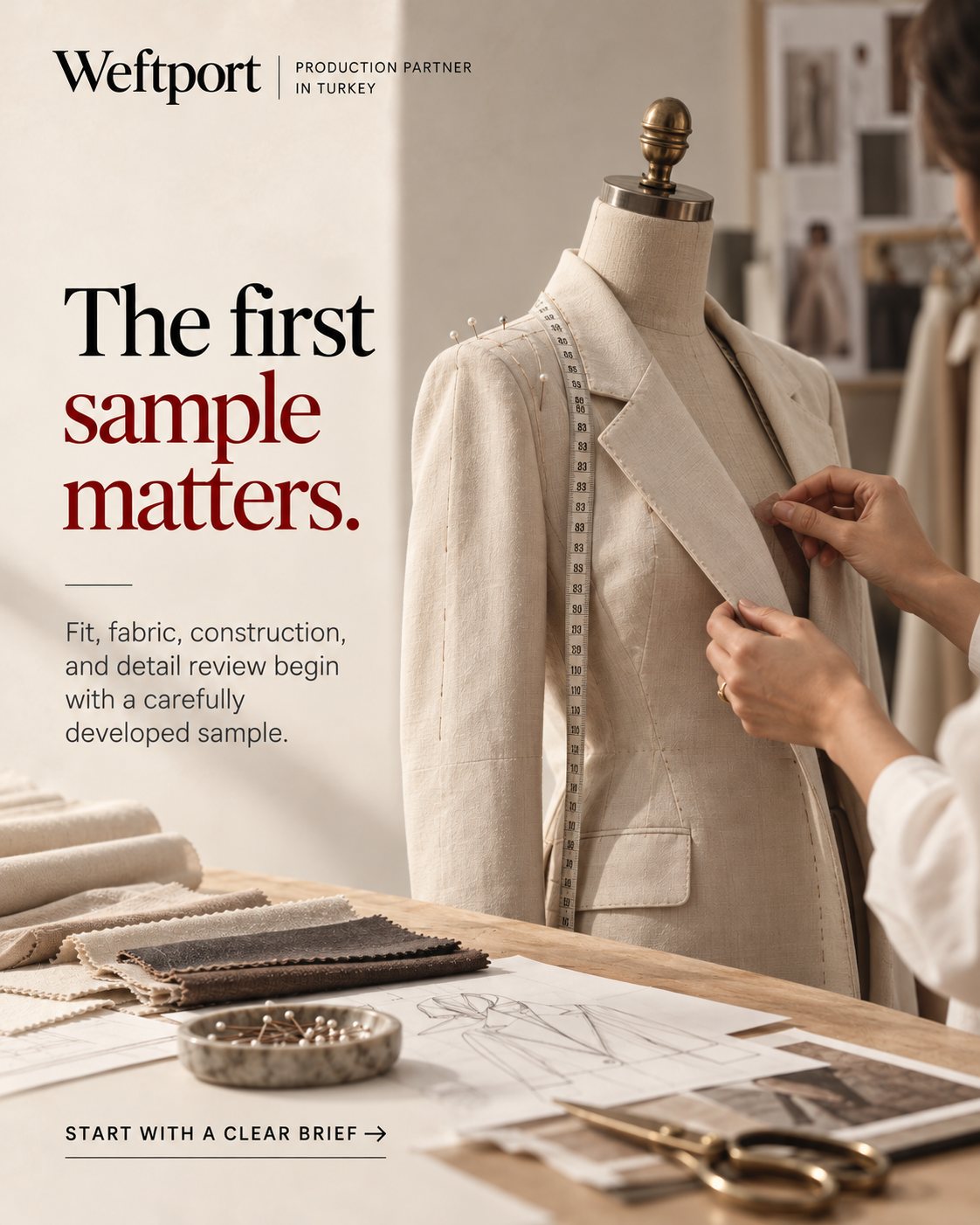
- Skipping sampling to save time. It usually costs more time later.
- Vague size splits. Confirm quantities per size before cutting.
- Informal changes. Every change after sample approval should be recorded.
Language and market expectations
If you sell in the UK or Germany, think about what your customers expect: care labels, composition labels and size labelling follow market rules that you remain responsible for. Tell the factory early which market the goods are going to so the labelling and packing instructions are correct from the start.
Questions worth asking before you commit
A short list of direct questions tells you more than a brochure. Who will be my contact, and how quickly do you normally reply? How do you record approved samples and measurements? What happens when fabric arrives with a defect? How are changes after approval handled and documented? Which checks happen before packing? Can you show how you control colour? A good partner answers plainly, including the points where something is not possible. Be cautious about answers that promise everything: a realistic partner tells you what depends on fabric, design and quantity, and asks you for the information needed to give a firm answer.
Next step
If you are comparing options, send us the same brief you send everyone else and see how the answers differ. You can review our collections, read about the process, or contact us with your category, estimated quantity and design direction.
FAQ
Can small brands work with a manufacturer in Türkiye?
Yes, provided the project meets the minimum of 500 pieces. A focused range of a few well-specified styles is the best way to start.
Do retailers and brands use the same process?
The five steps are the same: briefing, quotation, sample, production and delivery. Retailers often put more emphasis on repeatability across deliveries.
Which languages can I use to communicate?
English or German.