Three composite scenarios that show how decisions are usually made. They are illustrations, not client cases, and no results are implied.
Scenario 1
A young label plans a first capsule
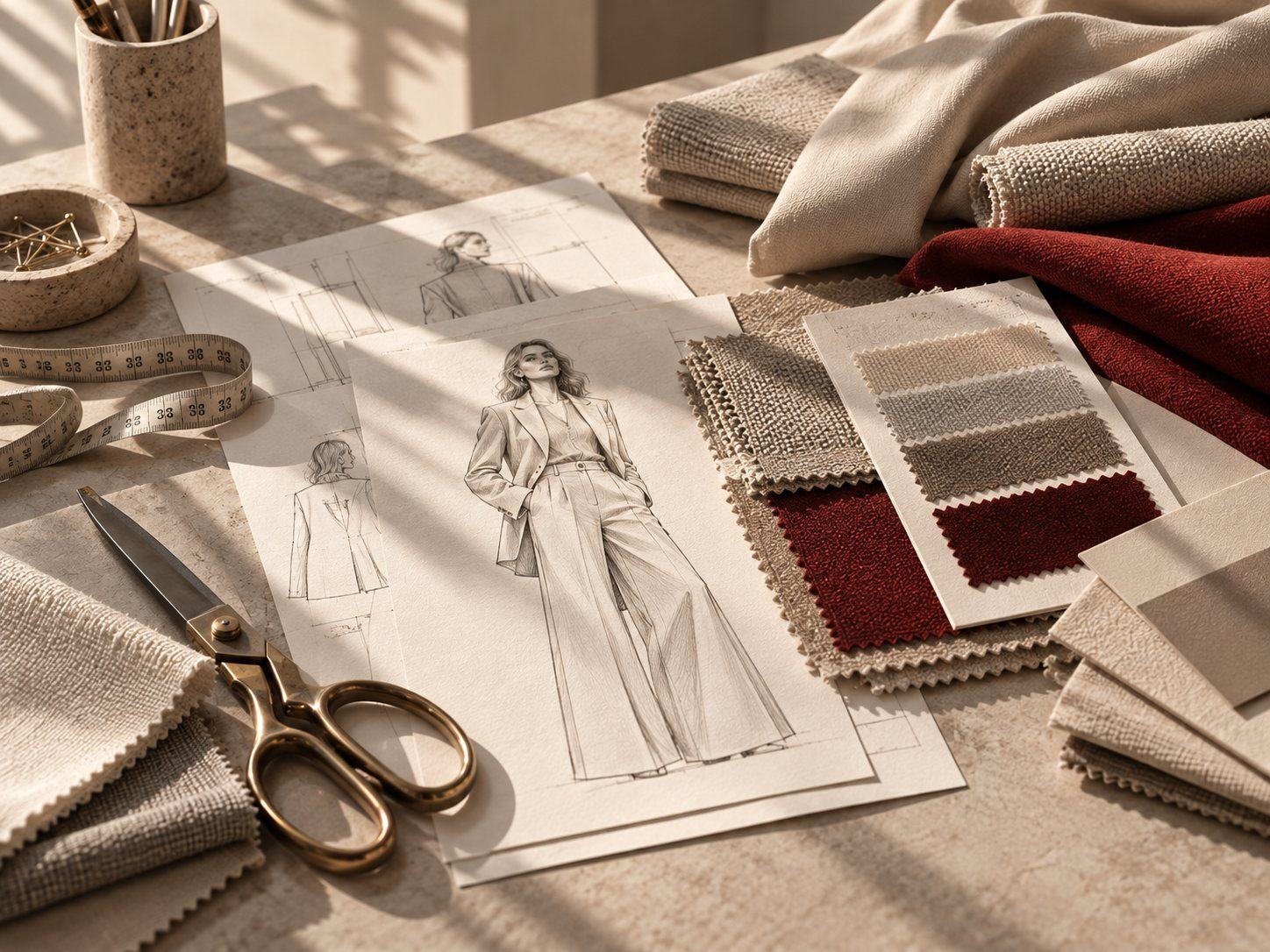
- The label has flat sketches, a reference blazer and a fabric idea but no full tech pack.
- They send category, an estimated quantity of 500 pieces split across three styles and a target market.
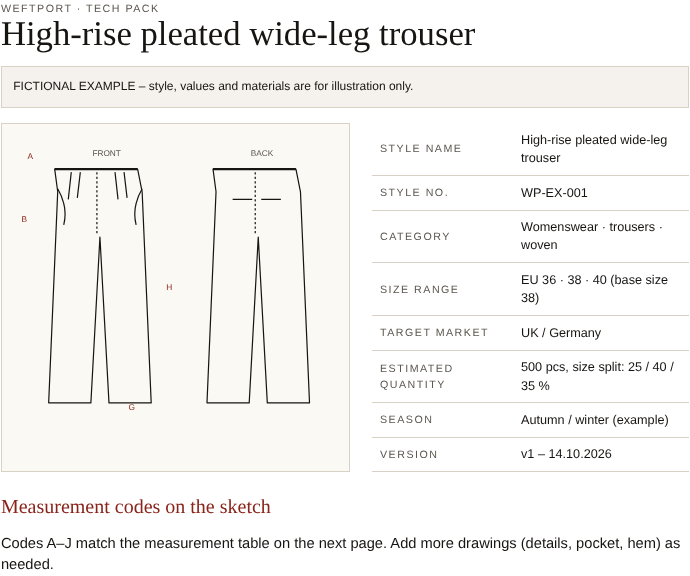
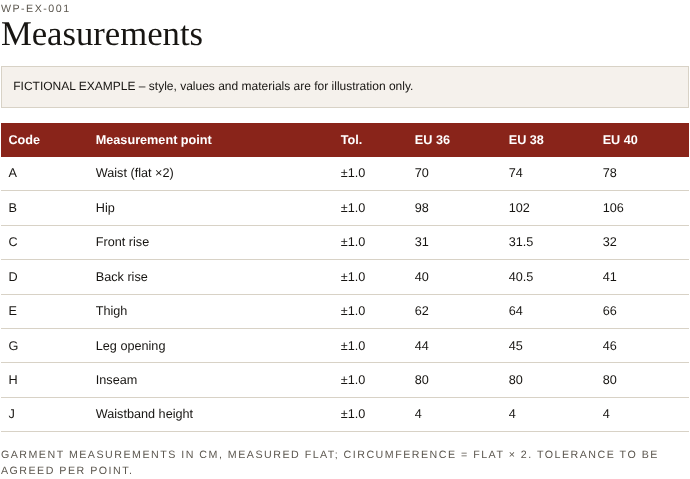
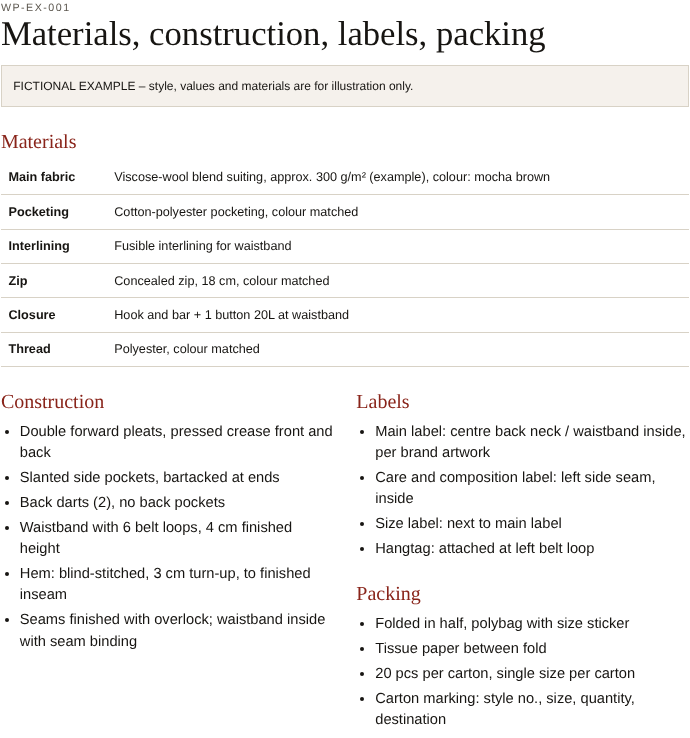
- The factory asks for measurements and the fabric direction, then quotes. The label uses the tech pack template to close the gaps.
- Two sample rounds are planned for the blazer, one for the knit top and the trouser.
- Lesson: a focused range and a consolidated feedback list keep the first project readable.
Scenario 2
A retailer sets up a repeat programme
- The retailer buys the same trouser fit across several deliveries.
- They keep the approved sample, measurement table and fabric approvals in one folder, with version numbers.
- For each reorder they send the same file set and note any change in writing.
- Deliveries are compared with the approved sample using the same checklist.
- Lesson: documentation turns a one-off order into a repeatable process.
Scenario 3
A kidswear collection with trim-sensitive details
- The brand designs a coat with buttons and a knit set with drawcord-free hoods.
- Before sampling it checks the rules that apply in its market and shares them with the factory.
- Buttons and snaps are specified together with the pull test in the quality workflow.
- Size bands and measurements are defined per band, and one reference size is sampled first.
- Lesson: safety-relevant details belong in the brief, not in the correction round.
Reference values and the example are for guidance and illustration only. Labelling, safety and compliance rules for your market remain your responsibility.