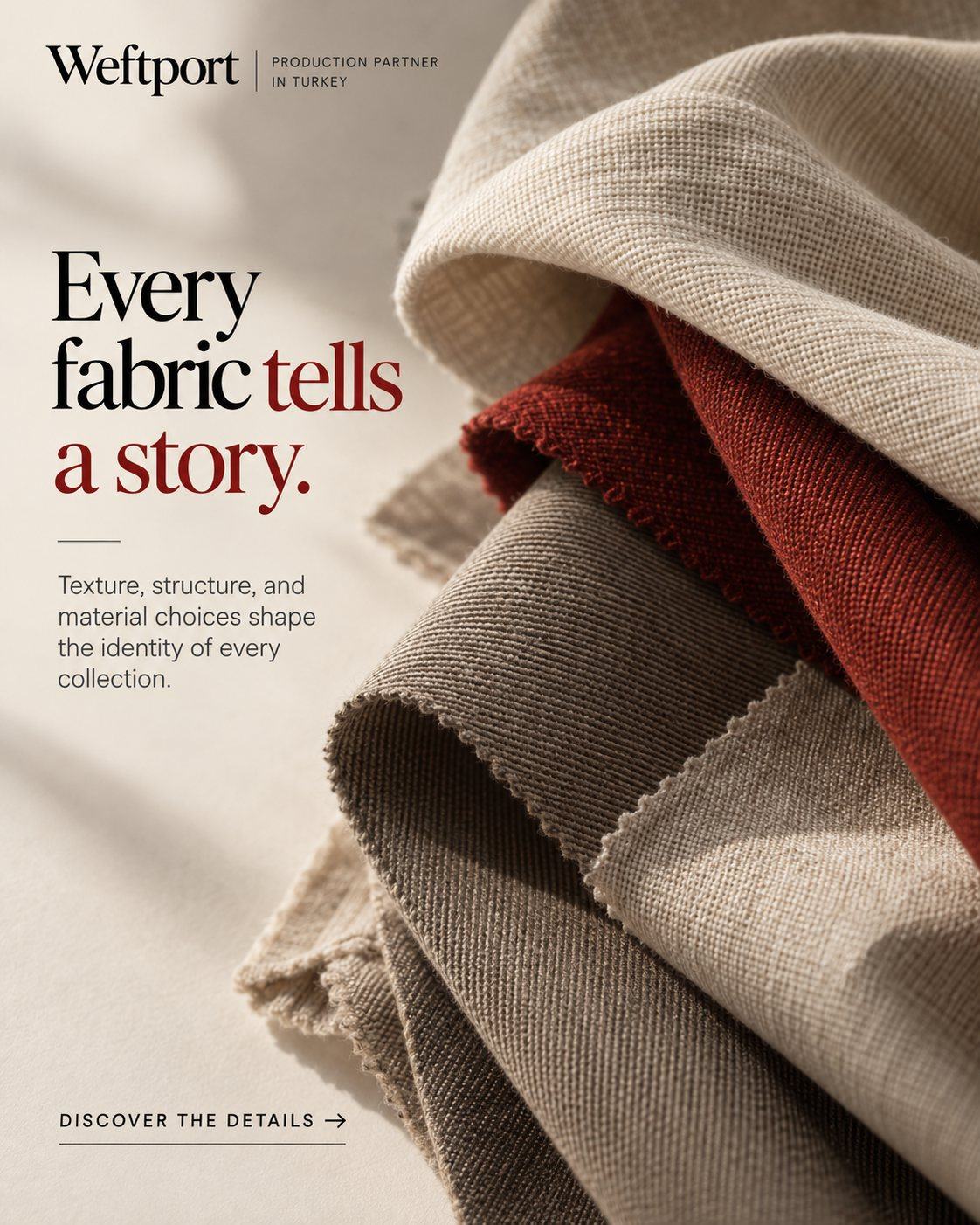
Every fabric tells a story. It sets the drape of a dress, the structure of a coat and the feel of a knit against the skin. It also drives cost, sampling effort and how forgiving a garment is in production. Choosing fabric is therefore one of the most important decisions in a collection. This guide explains the main variables and how to test them before you order a full run.
Woven or knit
The first question is construction. Woven fabrics are made by interlacing warp and weft threads and are used for tailoring, shirts, dresses and trousers. They hold their shape and tend to be stable. Knit fabrics are built from loops, stretch and recover, and are used for jumpers, tops and many essentials. They are comfortable and forgiving, but they behave differently in cutting and sewing.
Choose the construction that fits the garment. A structured blazer in a soft jersey rarely works, and a fitted top in a rigid woven needs extra ease. If you are unsure, start from a reference garment you like and ask which fabric families it belongs to.
Fibre and composition
Natural fibres such as cotton, linen and wool offer breathability and a familiar feel. Man-made fibres such as polyester and viscose add drape, durability or easy care. Blends combine properties. Composition affects handfeel, creasing, shrinkage and price, so state the composition you want or the performance you need, for example drape, warmth or crease resistance.
Be careful with claims. If you plan to market a garment as organic, recycled or certified, discuss documentation with your supplier before you commit to the fabric, because the claim has to be provable.
Weight, handfeel and drape
Fabric weight, often given in grams per square metre, influences how a garment hangs. Heavier fabrics create structure and warmth, lighter ones create movement. Handfeel is subjective, which is why you must touch swatches rather than judge from photographs. Ask for swatches in the colours and finishes you are considering and hold them against your sketch.
Colour
Colour is easy to underestimate. A shade that looks right in daylight may shift under shop lighting. Our partner factory uses a colour light box to check colour under standard light sources, which helps both sides agree on the shade before bulk production. Provide a physical colour reference if you can, not just a screen colour.
What to check on a swatch
- Handfeel and drape. Fold it, crumple it and let it fall.
- Appearance after wash. Wash a swatch the way your customer will.
- Dimensional stability. Measure before and after wash.
- Colour fastness and rubbing fastness. Wet and dry rubbing matter especially for dark and saturated colours.
- Seam behaviour. Does it fray, pucker or slip?
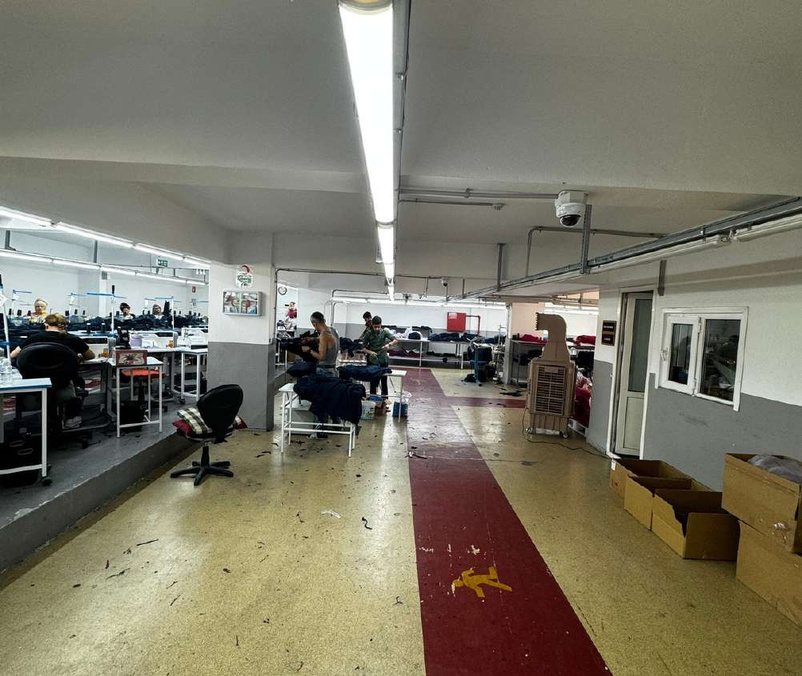
These tests are part of the quality workflow at our partner factory, which also includes fabric inspection on arrival and laboratory testing. Read more on the quality page.
Fabric and cost
Fabric is often the largest part of a garment's cost. Small changes in composition or weight can move the price noticeably. If your budget is tight, discuss alternatives early, for example a similar look in a different composition, rather than cutting quality elsewhere.
Defective fabric and what happens to it
Even good fabric can contain flaws. At our partner factory, incoming fabric is inspected and defective fabric is set aside before cutting. Ask every supplier how they handle this, because cutting flawed fabric means flawed garments.
Building a fabric brief
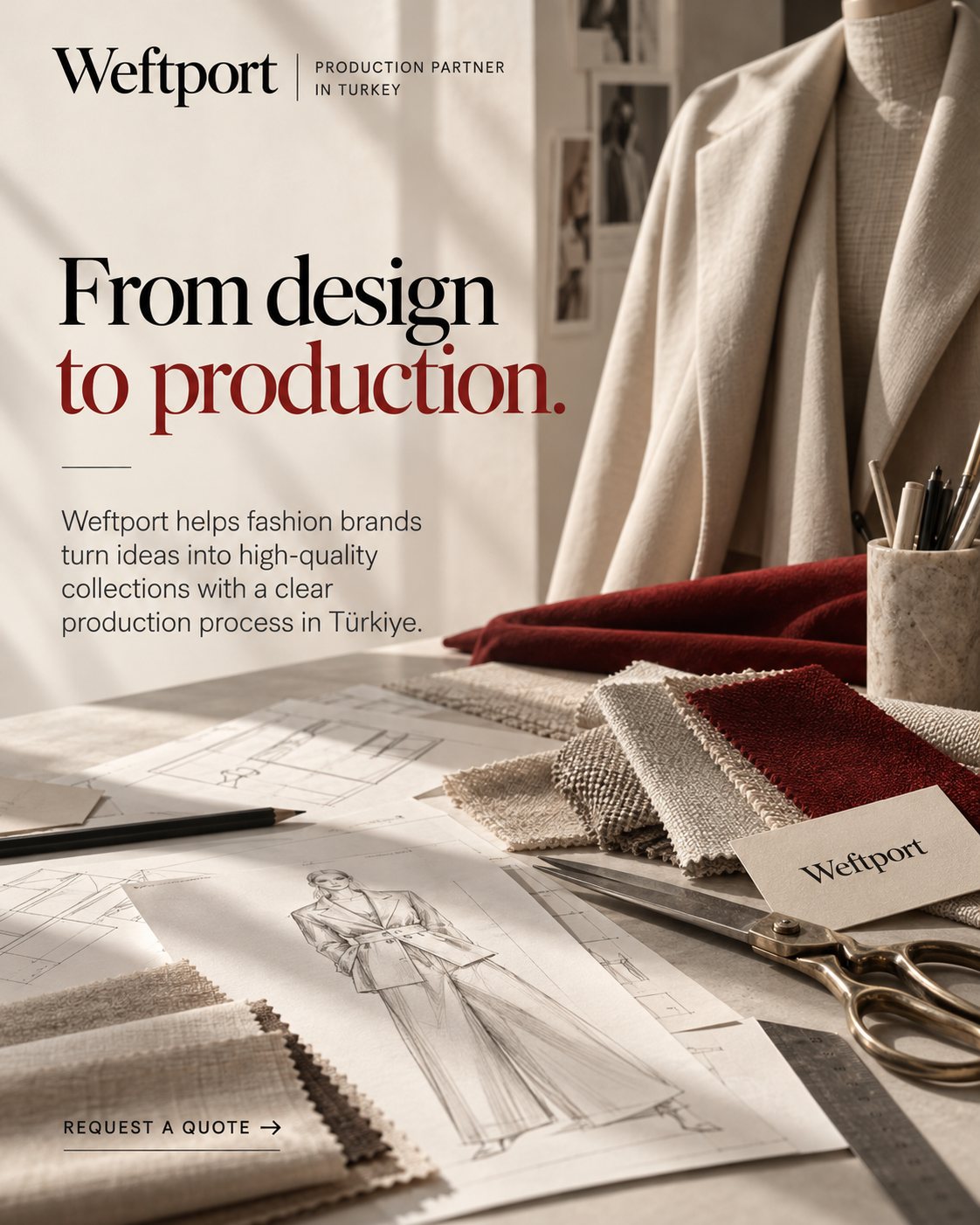
A useful fabric brief is short: construction (woven or knit), target composition or performance, weight range, colour references, finish and the garment it is for. Add the quantity you expect, because availability and price depend on it. If you are flexible, say which properties are essential and which are negotiable. That lets the factory suggest alternatives that fit your budget without losing the look you want. Keep every swatch you approve, labelled with date and style, so the reference is never in doubt when the bulk fabric arrives.
Next step
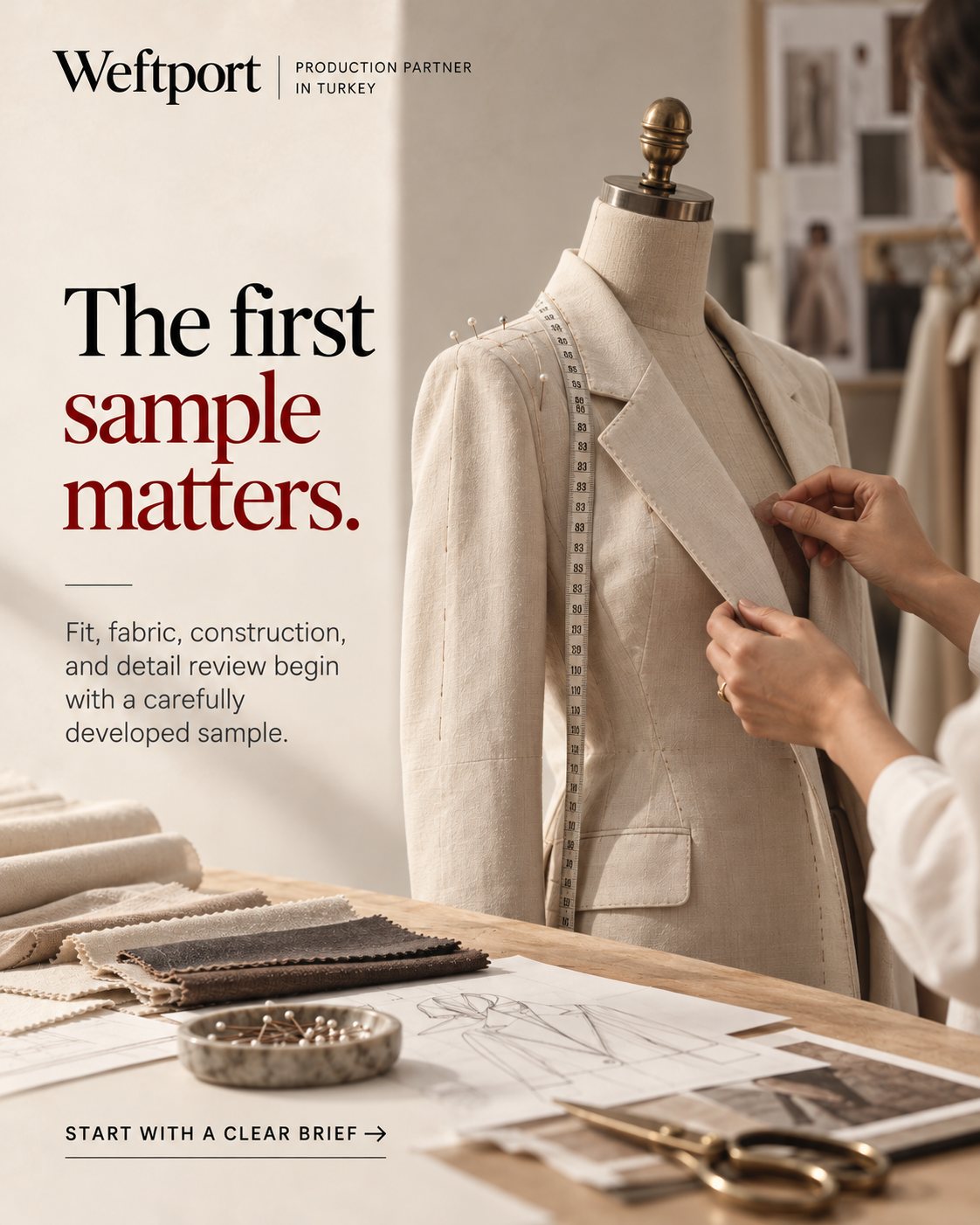
Once you have a fabric direction, include it in your brief together with swatches or references. Our guide to the first sample shows how the fabric performs in a real garment, and you can contact us to discuss options for your category.
FAQ
Should I choose woven or knit?
Choose the construction that suits the garment: woven for structure and tailoring, knit for stretch and comfort. A reference garment is the best starting point.
Can I send my own fabric reference?
Yes. A physical swatch or reference garment is better than a screen image, especially for colour and handfeel.
How is colour checked?
Our partner factory uses a colour light box to check colour under standard light sources.